

Dengue fever and vaccination
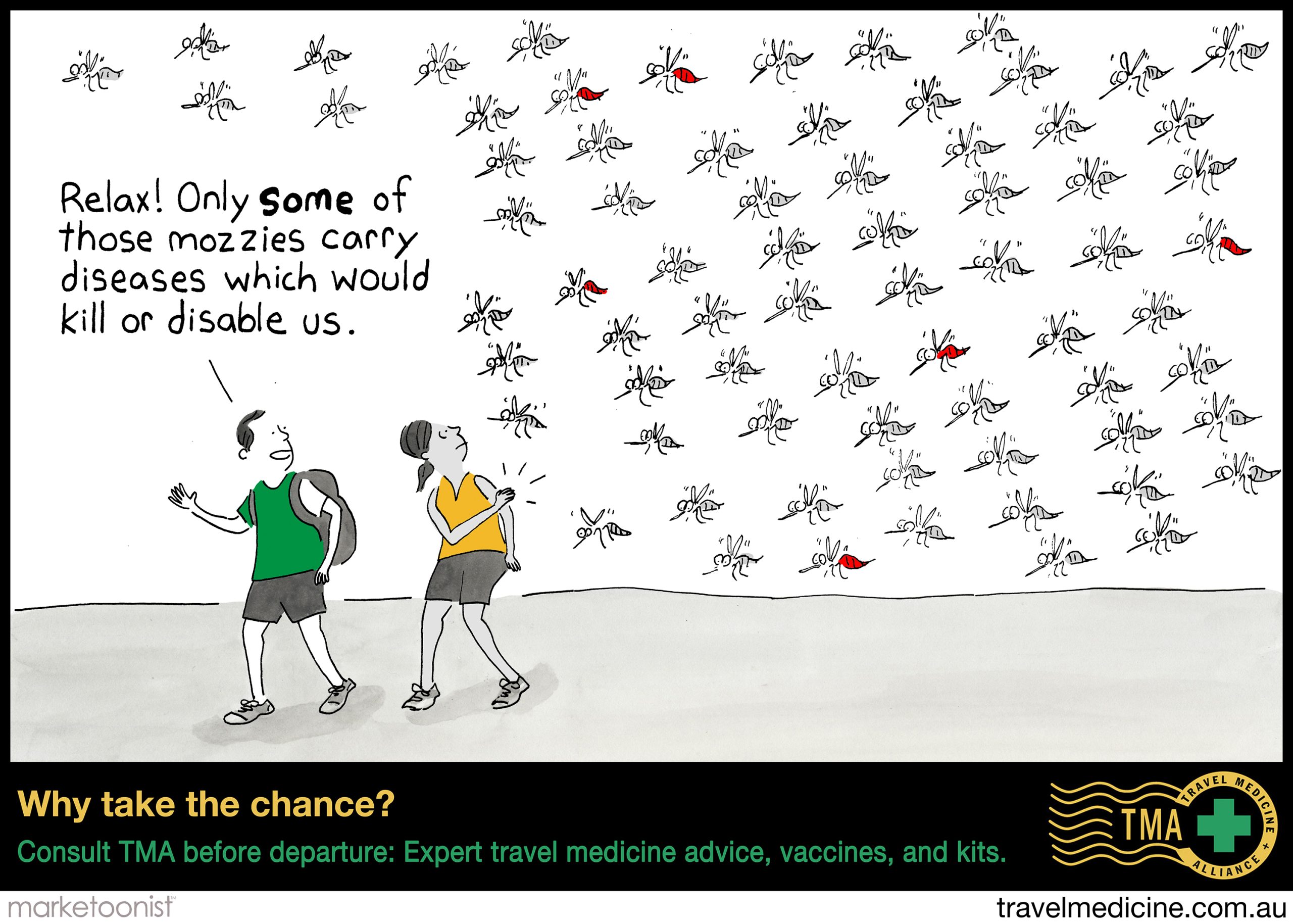
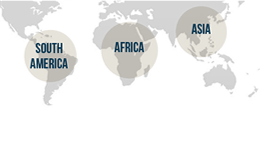
September 29th, 2026Dengue Fever is a disease spread by day-biting mosquitoes in the tropics. About 19/20 cases in Australians are caught overseas – especially in Indonesia, Thailand, Vietnam, India, and the pacific islands including Fiji
The global incidence of dengue has increased tenfold in the last 20 years, likely due to rising temperatures, urbanisation and travel. Dengue mosquitoes breed easily in cities – even in a pot plant saucer. Infected travellers can inadvertently carrying Dengue to new areas.
About half of the world’s population is now at risk of dengue, with an estimated 100–400 million infections occurring each year.
https://www.who.int/news-room/fact-sheets/detail/dengue-and-severe-dengue
The illness
About 1-2 weeks after the mosquito bite, a mild runny nose develops, followed a few hours later by the sudden onset of fever, a splitting frontal headache, and severe muscle and joint pains. (Dengue is sometimes called break-bone fever.) Pain behind the eyes is characteristic. Some persons notice a change in taste sensation. A rash occurs in 60% of sufferers. The rash can be flat or slightly raised, red or pink, with spots or blotches. It is usually present on the trunk, limbs, palms and soles. Other diseases can cause a similar-looking rash.
Severe symptoms usually last one week, with tiredness persisting for several weeks after. Sometimes, after 2 to 3 days of illness, the fever and pains appear to settle for a few days, and then symptoms return, though less severely. Usually, sufferers make a full recovery.
Summary of common features of dengue:
- Fairly sudden onset
- Fever
- Headache – especially pain behind the eyes
- Joint or muscle pain
- Rash
About one in 4 persons who contract dengue develop symptoms.
Although a very unpleasant illness, serious complications are usually rare from the first attack of dengue. Travellers who have a pre-existing illness or those who suffer dengue infection at the same time as another infection ( eg COVID) will get especially ill.
There are four strains of the dengue virus. If you catch one strain and then later catch a different strain, the second attack is likely to be more serious than the first. A second attack can cause dengue shock, which can even be fatal if not treated properly. Dengue shock can cause the sufferer to develops excessive bleeding into the skin, mouth, nose and internal organs …leading to a life threatening drop in blood pressure. The technical term is Dengue Haemorrhagic fever, and it is a leading cause of serious illness and death among children in some Asian countries.
Vaccine to protect against Dengue?
A new dengue vaccine is now available in Australia.
Vaccination may be particularly useful for some travellers who have previously had dengue fever and are returning to areas where dengue is common. Whether vaccination is appropriate depends on several factors, including previous dengue infection, age, medical history and travel plans.
The vaccine is a live vaccine, so it is not suitable for everyone, particularly people who are immunosuppressed. It requires two doses, given three months apart, and vaccination may cause temporary side effects such as fever, tiredness or a rash.
Travellers should discuss their individual circumstances with a travel medicine provider well before departure.
If you are leaving at short notice, one dose will give you some protection but it still takes 2 weeks to work. The vaccine can also cause mild to moderate side effects sometimes a week or so after vaccination; another good reason to have the vaccine at least 2 weeks before departure.
Australian recommendation guidelines are here: https://www.health.gov.au/resources/publications/atagi-statement-on-the-clinical-use-of-the-dengue-vaccine-qdenga-for-australians?language=en
Regardless of whether you are vaccinated, it is a good idea to avoid daytime mosquito bites as much as possible, and to get any fevers checked if you have been visiting the tropics. Dengue is common but other diseases sometimes occur – even malaria.